
Current Temperature

 Log In
Conservation effort will protect nearby Sagebrush Flats
Posted on June 4, 2026 by Ryan Dahlman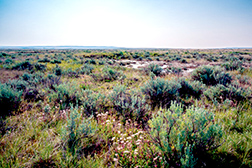 Southern Alberta Newspapers Photo Courtesy of Image Sean Feagan/NCC Staff. PROTECTION: Sagebrush Flats is uniquely positioned near other conservation areas and Crown lands to help create a connected grassland landscape to support wildlife and ecological resilience in the area.
By Zoe Mason
Southern Alberta Newspapers
One of the largest intact pieces of native grasslands left in Canada will be protected under a new conservation project.
The Nature Conservancy of Canada announced the permanent conservation of Sagebrush Flats on May 15, Endangered Species Day.
The 1,030-hectare property is located near the hamlet of Manyberries. Featuring both grasslands and rare silver sagebrush, the land is home to 12 federally listed species at risk.
NCC stewardship manager Megan Jensen says 75 per cent of Alberta’s species at risk live in grasslands.
“It’s one of the most threatened ecosystems in Canada at this time,” she said.
Sagebrush is a waist-high, aromatic shrub that provides food and shelter for an assortment of local wildlife, including one of Canada’s most endangered species, the sage-grouse.
Sage-grouse populations have declined nearly 98 per cent since the 1960s, leaving only a small population left in this corner of the province.
Grasslands also make up one of Alberta’s most effective carbon sinks, able to store up to 180 tonnes of carbon per hectare.
Achievements in conservation like this one are the product of collaborative relationships between government, environmental organizations, landowners and agricultural operators.
Jensen says this particular property was owned by a local cattle producer who formed a relationship with the NCC over many years. They collaborated on smaller-scale conservation projects prior to this week’s landmark project.
“It really comes about by building trust, working in the community and just respecting what they do on the land and valuing that.”
It is ultimately a symbiotic relationship. Preserving sagebrush ecosystems helps to filter water, reduce runoff and stabilize the dry landscape, supporting sustainable ranching in the area.
Jensen says the land will continue to be grazed by local ranchers’ cattle, which helps promote the heterogeneity that contributes to a biodiverse habitat for species at risk.
“It’s a very important part of sustainability. When you think about grasslands, it’s part of what makes them so special. They are a real collaboration between species, people and economics, and they benefit the whole community.”
Going forward, changes to the landscape will be approached with conservation in mind. For example, new fencing installed on the property will be wild-life friendly, featuring smooth bottom wires and increased clearance so animals like the pronghorn, another at-risk species, can pass safely.
Jensen says the NCC is always working across southern Alberta to connect with willing landowners to expand the protected footprint in the region.
“We meet with local ranching families and other partners to see if it’s something that works for their operation,” said Jensen.
“There’s always more work to do. It’s just a matter of making sure that we’re available if needed, and being good neighbours on our land.”
Leave a Reply
You must be logged in to post a comment.